Bait
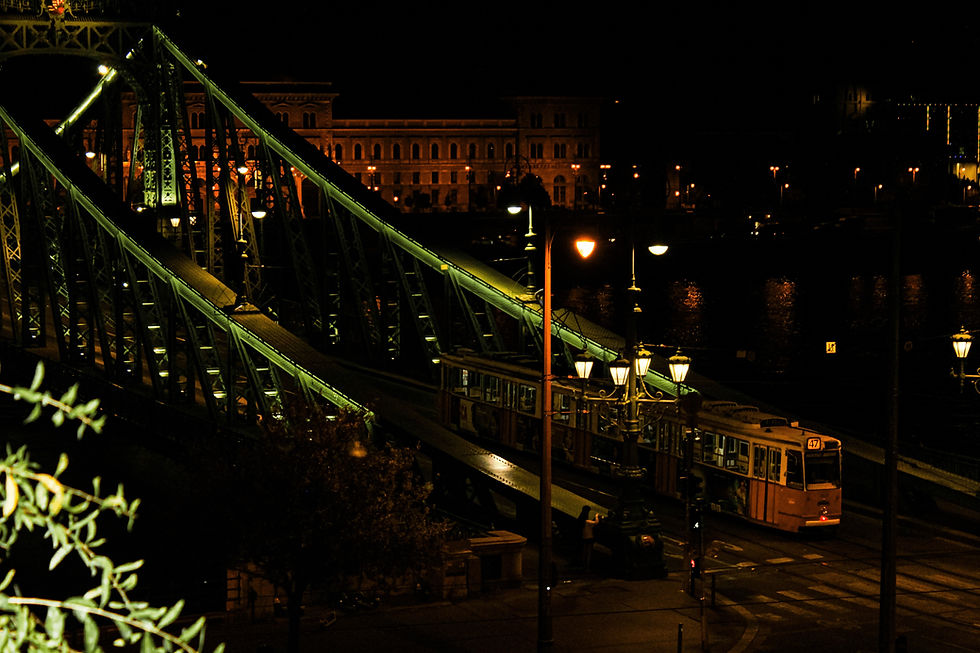
Photo by umairaliasad via Pixabay (licensed under the Pixabay License)
A short story by Emmy Slåttli
I thought about clawing my way into my brain last night. I wanted to. I wanted to peel each layer of my skin from my skull to break whatever frowns upon me as I live. What saintly cruelty is this? I am like a cadaver wishing to scoop the marrow from my bones and feed upon whatever holiness flows through my veins. But I didn’t. Instead, I worked my way through a full pack of cigarettes as the night flew by, moonlight gleaming through the consuming cloud of smoke which formed around me. Budapest had that thing which was impossible to catch yet so easily found; that everlasting voice whispering at you to live. That voice telling you to drag your fingers against the foundation of buildings that had seen history pass, that voice telling you to rip your ribs apart and become part of the city itself. Not even as you drop your cigarette from the third floor and accidentally burn a black spot on the head of an old gentleman passing by does reality come to pick you up from the haze of Budapest. My hotel room smelt of alcohol and marijuana, which wasn’t mine but had crept up through the window as some kids smoked downstairs. I preferred cigarettes; they give off that burning sensation in the throat, a reminder that I am made of flesh. I lived in a daze, my soul floating around in galleries and museums, sailing on the Danube. I didn’t know myself and tried everything to feel something. It was a warm night in August, trumpets still playing from the jazz bar two streets down. A seagull was circling my window in hope for a treat, and the American man was still stretched out on my bed in a deep sleep.
He had approached me last night, a real hero who knew just enough Hungarian to order me a drink, “Excuse me little lady, how are things going for ya? Need a hand?” he asked with a hand pushed up against the bar behind me, overhearing my desperate attempts to order a martini with extra olives. “Yes, please” were the words which escaped me as humiliation set in. As much as I did need help, I wasn’t fond of how helpless I felt. He paid for my drink, ordered himself a Japanese whisky which looked like acid, and demanded an evening of intriguing conversation as a thank you for his salvation. A chain hung around his neck with an outline of a cross visible through the unbuttoned, white shirt. A part of me wanted to throw my martini in his smug face and leave him standing. But then again, he was tall and I was drunk and alone. “Do you think Descartes meant it literally when he said that God is dead?” Idiot. “Um, no…” I didn’t dare correct him, “I think it was meant more as a metaphor… to maybe help us think about our own moral understandings and how we chose to see our lives perhaps?” He didn’t budge. He stated, “Actually, I do believe it was literal. I think he meant that we have killed our only chance of happiness.” I couldn’t tell if it was the alcohol or the sheer need to get the man to shut up that made me want him. The dim light fell in the right places, emphasising his jaw and brows. He was beautiful. Too bad he made my toes bend backwards in disgust when he spoke. “You know, babe, if we had a son, he would be insanely smart… he would be like a new Socrates and would maybe play the guitar. Maybe you could be my wife?” The walk back to the hotel was long. We lingered in corners as he lectured me on the things his father had taught him of Ancient Greece, of the stories of Europa and how the Minotaur had killed Zeus. I debated whether to tell him they were all wrong as we stopped for hazelnut ice cream, but I didn’t want to seem like one of those girls who thinks they know it all. My mother used to tell me that it was best to leave the men to it, for them to believe they could pick the world up with their pinky and command it with sheer will. He didn’t ask anything about me, but he listened in his own way when I spoke. I told him about my nineteenth birthday, about how I broke my arm in third grade and about my first kiss. “Was it good? The kiss?” was the question he managed to grunt out as he demonstrated the twenty steps he could walk whilst doing a handstand. “I guess the kiss was alright.” It wasn’t. It was a bad kiss. But I think it was my fault; I didn’t know how to kiss, but I didn’t have the nerve to tell him that.
He raised his brows or gave a blunt “mhm” for every story I told. Descartes made a few more appearances as well, all in the wrong context, and he kept peeling the flaky blue paint as we climbed the stairs to reach my hotel room. He intrigued me; I felt small, like a child waiting to be held. Silence only came when we were alone. As I invited him to my room, lit a smoke and settled on the windowsill, the world disappeared. He saw me as I couldn't see myself. I was smarter; I knew Nietzsche, Ancient Greece, and perhaps more about America than he did. But in a strange way, he knew me. I left my body, I left the room, I left the world. I stood by and felt my soul watch us from the corner. I sought for myself as one looks for details in a Renoir. I sought for myself in museums, in the paintings of Parisian societies, in the mysteries found in the people of the past. I wasn’t there. I was here, in the hotel room where my clothes decorated the floor and the desk was sticky with vodka and a lipstick I’d broken the night before. A half-eaten croissant and a box of strawberries sat on the chair next to the window, a good combo to nibble on between smokes. I saw myself in my habits, in the mess I left and called it personality. My body moved from the window all the way down his, wearing a navy dress and my hair tied up. I wasn’t mysterious; I was lost. I belonged to no one. Not even to myself. But I was there, in the exhibition; free for him to find, for him to watch and to take. I was his, and he didn’t even know my name.
I wanted to cry out for help, to fight, to scream, to cut myself open. Instead, I kissed him. He stroked my hair, picked me up and gently placed me on the bed. He was a stupid man, an ignorant one, yet he knew I was human. I didn’t even know I was. What hollow creature could I be? A corpse, a cadaver without a spine or without a life to set free? Was that it? Was I soft? Easy to cut and starve? I didn’t know what I wanted, or who. I wanted to be alive, to feel somebody’s heat and realise that they could also feel mine. How did I know if I wanted him or not? Or if I simply wished to fill the void I created when I couldn’t stand to look at myself. Nothing tempted yet disgusted me more than his hands in mine, our bodies in sync.
I did everything right and was still utterly incapable of staying whole. I felt myself split in two, not knowing if what I wanted was good or bad. Perhaps there was an option containing a little of both? Was succumbing to his will a way of finding myself? Or was I allowing myself to participate because I knew I had the power to stop? Or was I punishing myself once again for not speaking up? Then again, why speak up when I had nothing to say? I felt him everywhere, and in turn, I became nothing. I offered myself to him as I so often do to death. But death never takes the bait.
Edited by Isabel Orlik, Creative Editor


Comments