Bridgers is Back: A ‘Lost Weekend’ Review
Updated: Sep 6
I’m sitting on a ferry from Koh Phangnan to Koh Samui. It’s a blue-sky, 30-something-degree kind of day, and I'm defying the laws of pathetic fallacy by listening to Phoebe Bridgers’ newest record, Lost Weekend.
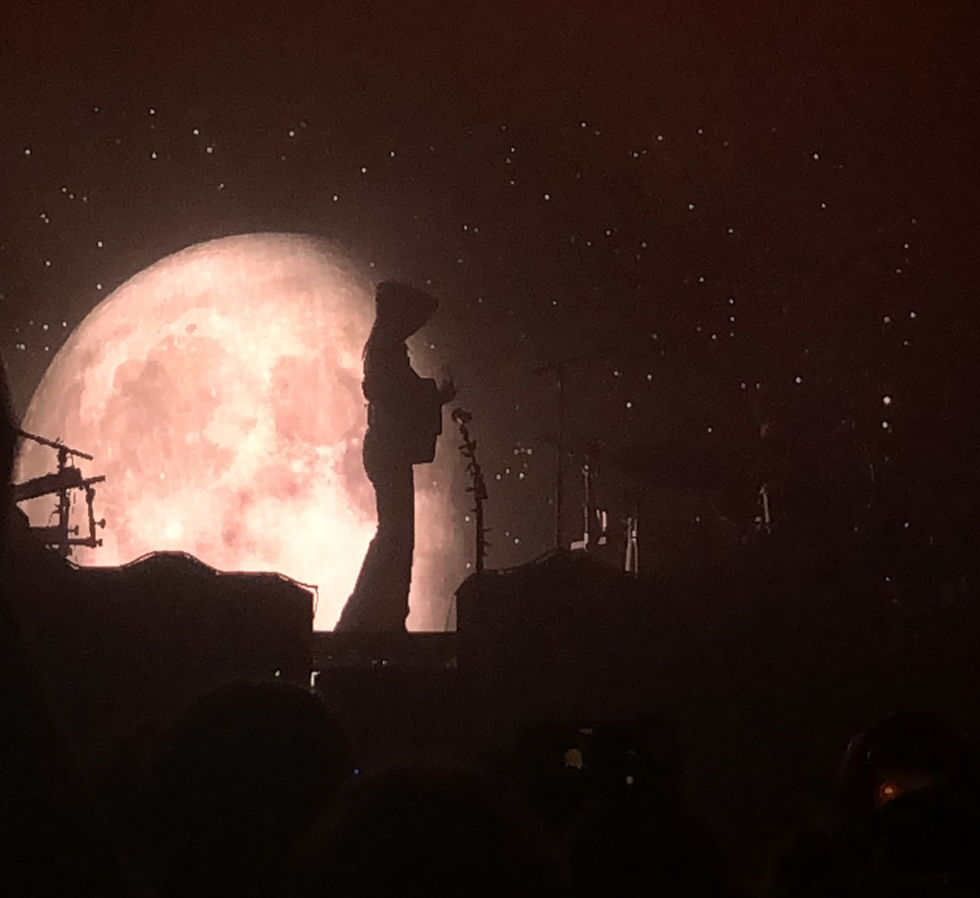
Full of haunting melodies and crescendoing endings, Phoebe Bridgers is at her prime. Six years after Punisher, Bridgers returns with a distinctly space-themed rollout that included secret pop-up shows, planetariums, and a seemingly planned record release according to a solar eclipse. It is clear that Bridgers’ return is deliberate and, above all, her choice. As the boundary between artist and fan becomes increasingly blurred, this power is vital not only to artistic freedom but also to this album.
Bridgers invites her audience back inside her world with “The Outside”, in which futuristic vocals establish key themes of loss, grief and performance. Dissociation and feeling like one is watching their life from the outside is a recurring theme in Phoebe’s work, calling back to her 2022 release “Sidelines”, which reflects this feeling of being a wallflower, disembodied from your own reality.
This record makes it clear: she no longer wants to perform any part of herself, whether for her listeners or for people in her life. The semantic field of theatre in “I Can’t Wait” replicates this idea of performing a character instead of fulfilling one's truth. Behind a somewhat futuristic vocal, Bridger’s opening track invites her audience to return inside her world on her own terms. This is followed by the only single released in this unorthodox rollout, “Lost Boys”, which proposes another theme, nostalgia and growing up, using the childhood motif of Peter Pan’s Lost Boys. This essence of innocence runs through the test of the songs.
This record has a distinctly nostalgic essence, a sense of reflection on growing up and accepting the new. “Lost Boys”, the only and lead single, proposes this theme through the motif of Peter Pan’s troupe of kids who ‘never spen[t] their lunch money’. She alludes to loss in a different light: loss of childhood innocence and rose-coloured glasses. Throughout the record, she continues this through juxtapositions of ‘stars on the ceiling’ and space, differentiating between the playfulness of youth and the reality of growing up. This record is plagued with acceptance and the battles that come along with it. “I Can’t Wait” also features this balance between the new and the old, embracing the new whilst mourning what is lost with change. Here, Phoebe gives us a piercing truth: ‘I’m not good, but I’m better’, a sign that healing is not linear and must fluctuate to accommodate the human experience.
Phoebe lives outside her head in this album, whilst in her previous records she is distinctly singing from within. She’s growing, as is her audience, who have evolved separately to be reunited 6 years on. Lost Weekend is somewhat of a homecoming, feeling particularly pertinent to young adulthood. As per her classic style, this personal insight blends humour with sincerity, making jokes, but the punchline isn’t funny.
The production on this album also reflects these ideas. Whilst “Haunting” has a more country-esque whimsy, other tracks feel more futuristic and technological. Phoebe plays between analogue and digital sounds to create a cohesive yet eerie record. This record also feels more instrumental than ever, using melodies from her previous albums to construct symphonic sections of music. These callbacks to Punisher are indicative of the ideas of acceptance; she accepts and reinterpolates every part of herself, coexisting with all of them.
For the more seasoned fan, the self-referentiality is clear. Like all of her work, this record can stand alone and, in tandem with her other projects, building an almost tangible world for her listeners full of Easter eggs. Whether that's using musical motifs in “Liberty Tree” and "Lost Parade”, referencing her ‘boys’ of Boygenius, or ‘playing for no-one’ (“Chesapeake” from Better Oblivion Community Centre), Phoebe proves the authenticity of her word.
She also references the influences of those around her, showing her love for music and art. “The Governor's Waltz” feels very reminiscent of an Elliott Smith guitar line, both in name and instrument. She collaborates with herself, past artists and others. The elusive Son John Johnson, who is rumoured to be Geese frontman Cameron Winter, Boygenius bandmates Julien Baker and Lucy Dacus and Bo Burnham, to name a few.
It only makes sense that this record, which is full of call-backs and full-circle moments, ends with a reprise. “Lost Weekend (Reprise)” is reminiscent of a dirge, complete with an organ, making it feel like I'm sitting in a church, or rather hearing a church organist from a neighbouring room. I’m overhearing this last moment of catharsis on the album, a confession of love, grief and acceptance. This record is a testament to her skill and empathy as a person; she is able to reflect on her healing and loss both as parts of her. This is a record of hope and acceptance, of grief and growing up.
Edited by Mahak Naddafi, Co-Music Editor


Comments