Fascists Don’t Make Great Love Songs: An Interview with Ida’s Daniel Littleton
Updated: Aug 30

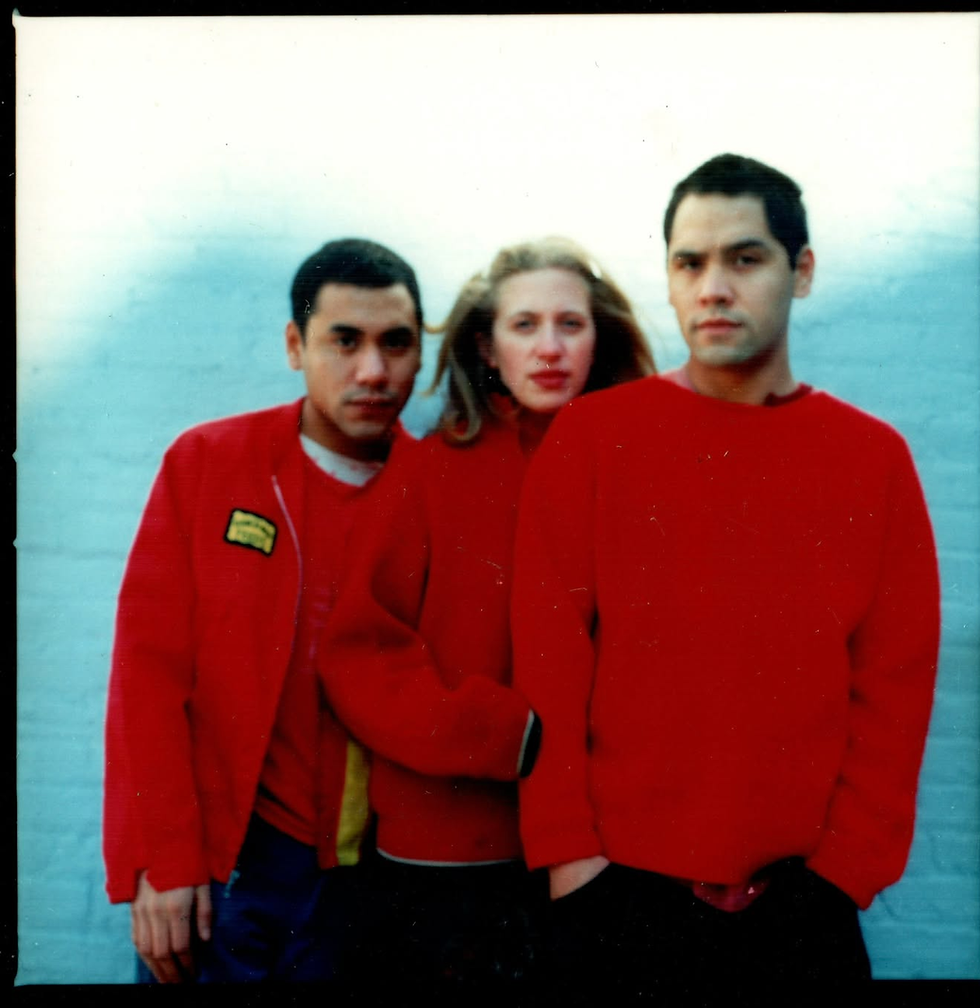
For over three decades, Brooklyn indie rock band Ida have built a world around patience, intimacy and human connection. Known for their sparse arrangements, three-part harmonies, the distinct songwriting voices of Daniel Littleton, Elizabeth Mitchell, Karla Schickele and collaborations with artists like Michael Hurley, HNIA, Tara Jane O’Neil, and Levon Helm, Ida’s music has always found beauty in allowing space for every note, voice and feeling to linger.
The band began in 1991 when Littleton and Mitchell started writing, recording and performing together as a duo, before expanding into a full band with the addition of Littleton’s brother Michael “Miggy” Littleton on drums and multi-instrumentalist Karla Schickele on bass. Between 1994 and 1997, Ida released three albums and several seven-inch singles through Simple Machines Records, earning acclaim for their understated compositions, rich vocals and quietly devastating songwriting. Their 1996 album I Know About You became a landmark release within the independent music scene, praised for its emotional depth and delicate arrangements. Working with indie labels like Tigerstyle and Polyvinyl, Ida released critically acclaimed albums like Will You Find Me (2000), Heart Like A River (2005), and Lovers Prayers (2008).
With a run of live shows having begun in Los Angeles on August 17th and concluding in Seattle on August 23rd, Ida’s recent tour marks another chapter in a story defined by longevity, collaboration and the enduring power of music made together. Daniel Littleton and Elizabeth Mitchell will also be touring with Undertow in September, bringing their shared musical language to audiences across the U.S. in intimate acoustic duo concerts.
Ahead of these shows, we spoke with Daniel Littleton about Ida’s return, the intimacy of harmony, the changing landscape of independent music, and why, after all these years, creating and sharing songs remains one of the most powerful ways to bring people together.
You’ve always seemed deeply curious about music. What still excites you about discovering artists today?
I am a lifelong fan of music and a musical omnivore. I also am of the belief that music is an irrepressible expression of our true nature, that it is always happening, somewhere, and it is helping someone in life. It is not contingent on industry, fame or delivery systems or algorithms.
There's a birth, a wedding, a gathering, a death, a celebration, a heartbreak, a solitary expression. Someone practicing by themselves or in a group. Someone writing something down, trying to remember an idea or a phrase they heard. It's always been like that since we’ve been around.
Today we have the luxury of finding artists from anywhere in the world instantly. Growing up before the internet, discovery relied on finding someone obsessed enough to spend years building an awesome record collection and being generous enough to share it with you, or it involved you paying attention to what was happening in your local scene.
Ida briefly signed to Capitol Records before returning to independence. What did that experience teach you?
We came from an independent approach to making music, but we wanted to see what would happen if we took a chance on a major label, to have the budget and the resources to record in great rooms and have access to incredible studios with extraordinary vintage gear. We were used to working fast and with small budgets. So while we were with Capitol we actually recorded three albums worth of music on their dime.
The people who believed in us at Capitol eventually left, and suddenly the environment changed. Fortunately, our allies inside the label recognised what was happening and helped us leave while keeping ownership of our master recordings, which was an incredibly rare and mostly unheard of thing. We retained ownership of all those master tapes, and released them all independently.
That experience reinforced something I'd always believed: working independently means you don't need someone else to approve your creativity, to be at the mercy of a committee or a company head.
Your music often carries a strong history and empathy. How much of that comes from your own upbringing?
Thank you for saying that! If it is true, I think a huge amount came from upbringing. I grew up in a family of musicians and educators. Our family culture and community was shaped by the Civil Rights Movement of the sixties, the fight for equality for all – these things had great meaning for us.
My mother's family experienced the Japanese occupation of the Philippines during World War II in a tremendously impactful and painful way. We grew up in a biracial family, my sisters and brother and I are first generation born in the U.S. on my mothers side of the family, in a time and part of the country where there was a lot of tension, and trouble, and post Vietnam war trauma.
There were hard things and meaningful exchanges, too.
Those experiences shaped the way my family saw the world. Today we'd probably describe it as intergenerational or epigenetic trauma, but long before we had those words, we understood directly that living alongside people who survived war leaves an imprint on you. My mother's childhood influenced how she raised us, and those experiences became part of who we are. She exemplified dignity, respect and compassion for self and others, the possibility of communication, love, intelligence, creative expression. My father was like this too. They imagined and embodied a better world than the one they lived in.
Do songs ever surprise you years after you’ve written them?
Absolutely – all of them.
Recently Liz and I have been playing intimate acoustic shows where people request songs from across our catalogue. It's been surprising to rediscover them because they still resonate, but often for completely different reasons than when we wrote them!
Even then, we tried to write songs using ordinary language that explored deeper emotions rather than documenting one specific relationship or moment. I always hoped they would be songs I wouldn't feel embarrassed singing years later!
Watching Neil Young perform ‘Heart of Gold’ really reinforced that idea for me. He wrote it as a young man, but after decades of living and facing serious illness, the same words carried entirely new meaning when he sang them later in life. The song hadn't changed, but he had and this changed the way we heard the song.
That's what keeps surprising me about our own music, even though it makes perfect sense. Songs about love, loss and impermanence continue to evolve as our lives do.
We recently revisited ‘Treasure Chest’, and I realised people could even hear it as a song about AI, intellectual property, cultural imperialism, appropriation/theft and creative ownership. That wasn't what it was specifically written about, but the core questions and thoughts apply, and songs often outgrow their original context, or resonate in new ways over time.
As songwriters, we eventually experience something listeners have always known: once a song exists, it becomes part of other people's lives as much as our own.
A song that really gets to me is ‘Into My Arms’ by Nick Cave & The Bad Seeds. Is there a song that still stops you in your tracks?
There are so many. Nina Simone's ‘Little Girl Blue’, ‘Isn't It a Pity’, ‘I Think It's Going to Rain Today’, ‘Just Like Tom Thumb Blues’ – really, almost anything she sang. I'll completely lose it if someone puts on Roberta Flack's version of ‘Hey, That's No Way to Say Goodbye.’
I also love ‘Into My Arms’ because Nick Cave begins with something so bold – “I don't believe in an interventionist God…” – before opening into this incredibly tender, vulnerable timeless love song.
The songs that stay with me do exactly that. They bring us closer to an internal experience, whether it's love, devotion, grief or gratitude.
Ida’s music has always embraced quietness and restraint. Did that feel like a natural instinct?
When we started, I'd come from playing in loud punk bands, but Liz and I wanted Ida to go in a different direction. We loved indie rock and “grunge”, but instead of louder guitars and bigger drums, we wondered what would happen if we stripped things back and got more minimal. We still loved distortion and feedback, but we wanted to pair those sounds with acoustic instruments and focus on songwriting.
Liz collected old amplifiers that sounded beautiful at low volumes, and she wrote in alternative tunings. We were inspired by artists like Joni Mitchell, Sonic Youth and The Velvet Underground, but we were really trying to create a space where people listened closely.
I still loved bands like Bad Brains and Fugazi, but I was equally drawn to quieter artists like Nick Drake, Bob Dylan, Richard and Linda Thompson, as well as the elegance of Prince and Sade. Songs like ‘Shotgun’ were our attempt to capture some of that warmth.
After more than thirteen years without releasing new music, what made the Numero Twenty show feel like the right moment to hit the stage?
Around that time, Numero Group kept approaching me about revisiting our catalogue and re-releasing all The Hated’s music. I'd resisted for years, but after the original drummer from our band passed away (Kenny Hill from The Hated), I wanted to honour his memory and realised I didn't want someone else deciding what happened to our history. I became much more involved in preserving the archive.
When Numero invited us to play the Numero Twenty show, it felt like the right moment. Both The Hated and Ida played. We had the original members there, along with Liz's and my daughter, who's now a musician herself (Storey Littleton released her first album At a Diner, on Don Giovanni records in early 2026). We were surrounded by old friends and bands we'd known for years, but there was also a younger generation of fans who had discovered us through the reissues and streaming.
We never expected such an incredible response. Seeing longtime supporters alongside younger listeners reminded us that these songs had found new lives, and new life and it inspired us to keep going.
‘Dreamdate’ feels less like a comeback and more of a continuation. Did it feel that way while you were making it?
It's actually an old song rather than a new one. We originally recorded it during the I Know About You sessions but left it off the record. While going through the archives for the reissues, we rediscovered it and realised it was almost like the missing piece from that period.
We've never stopped playing it live because it's always been fun to perform. It feels like one of our poppier songs, even though it doesn't have a traditional vocal chorus. Someone once told us the melody of the guitar itself functions as the chorus, and I loved that idea. I'd always joked that we couldn't write a chorus to save our lives, so hearing someone describe the riff in ‘Dreamdate’ that way brought me a lot of joy.
It reminded me of when D'Angelo (who is a total genius) released ‘Untitled (How Does It Feel)’. Liz and I were watching the video and I remember thinking, “This is so incredible but how is this a pop song?” It’s pretty avant-garde actually. It sounded like a collage of Prince's background vocals and there wasn't an obvious chorus. Liz just looked at me and said, “His body is the chorus.” I thought that was brilliant. Maybe that's what happened with ‘Dreamdate’ too – in a weird way, if people hear the riff as the chorus, then we somehow got away with it, and wrote a chorus in spite of ourselves.
The three-part harmonies have always been such a defining part of Ida’s identity. What is it about singing together that allows you to express something you couldn’t communicate individually?
I think harmony gives you a kind of courage because you have this literal support of other voices. There’s another person landing on an interval different from your own, but it is right there resonating alongside your own voice. It subtly changes the narrative, which shifts you away from the self-absorption that can come with songwriting. You’re suddenly responding to what someone else brings to the song.
Harmony can open a song up and allow you to hear something differently. It’s such a joy to sing with Liz and Karla – after all these years, it still feels like there’s so much we can discover together through harmony, tonality and feeling.
As you and Liz fell in love, did the way you sing together begin to take on a different meaning?
When Liz and I started singing together, we were also falling in love, so the connection we had through music became an expression of what was happening between us. We were discovering each other, sharing the music we loved, and figuring out what kind of songs we could create together.
Singing together was always a powerful experience for us, and Liz gave me confidence as a singer.
Looking back now, we’ve built a long history – we’ve been singing together for many years, and we’ve walked through a lot of life side by side. I really value the creative and dynamic space we share and make room for when we sing.
We sing in unison, sometimes dissonance (to me these are the closest, most powerful and favourite intervals), we sing by ourselves and together, and there is a harmony in all of it that I hope comes across when we play.
We try to care for the authenticity of where we are now, but I think the history we share gives us some confidence and trust in relation to the known and the unknown … if that makes any sense!

You and Liz have created something rare: an audio history of your relationship. What does it mean to have that shared record of your lives together?
Thank you, that's a really interesting way to think of it!
There’s something special about people who are close to each other sharing music, but it also comes with its own challenges. Making art can be all-consuming, and that can put pressure on relationships whether you’re romantically involved or not.
With Ida, I’m making music with my brother, my life partner and my daughter, and my dear friends. It’s a real family affair, and I’ve always had a lot of respect for families who create together. There’s something magical about singing with the people closest to you.
It’s pretty incredible to look back and realise we’ve created this strange audio history (like you say) that people can connect with. We’re still here, still together, and I feel incredibly lucky. It’s one of the coolest things in the world to get to do.
I feel more excited about the new songs than anything else.
As music consumption becomes faster and more immediate, has it changed the way you approach making slow, intimate music?
I’m sure it has, but probably in subtle ways. If anything, it takes me longer to finish and share songs now! I want to sit with them and make sure I’m saying what I want to say. The world spins faster and the Ida songs come together slower and the tempos are still pretty slow, haha.
At the same time, having access to so much music has made it feel even more precious. I love that I can carry hundreds of gigabytes of music with me and explore the entire history of recorded sound at any time. There’s something incredible (and sci-fi) about that.
But I also value the real-time experience of making, sharing, recording and performing music with people. There’s a sadness in what we’ve lost from analogue times – the intimacy of things like making a mixtape and sharing music as a personal discovery. Playlists and algorithms have their beauty, but that human connection still matters most of all to me, taking the time to really listen, and share the context of music.
Why do you think mixtapes carried such a personal sense of connection?
Making a mixtape for someone was an expression of time, attention, intention and focus. You had to carefully choose the songs, fit them onto the tape, flip it over and think about the experience you were creating for another person. It was about giving someone a moment of your attention, a kind of gift or offering.
Receiving one felt like receiving a document of someone’s interest in you. You had to press play and experience it in real time, following the same care and intentionality and timeline that went into making it. In this way, it is a reflexive kind of artform (mixtapes) that carries personal information and meaning.
I don’t think it’s just nostalgia. Music is a strange, unrepeatable experience but recorded music gives us this special and unique technologically driven experience of remembering, of hearing again.
It takes courage for someone to step up to a microphone and share something vulnerable, just as it takes courage to sit across from someone and say, “I want you to hear this” or for someone to say “I made you a tape”. As I get older, I appreciate those moments more and more. With Ida, we’re all drawn to that same feeling that goes into making a good mixtape: listening, creating and solving problems together! Not dissimilar to making an album, actually.
Having witnessed independent music evolve over the past three decades, how do you see the spirit of indie changing over time?
When I was growing up, the music of the ’60s and ’70s still felt relatively close. The Velvet Underground, Hendrix and The Beatles didn’t feel like distant history – I was living in the wake of that era. When I was a baby those bands were all still playing! Now, looking back at a record I made in 1996 being reissued in 2026, it’s surreal and actually far more remote in time than 1970 was to 1983!
Thirty years is a lifetime.
What’s interesting to me is how much the values of indie culture have carried forward. The idea of owning your work, challenging traditional industry structures and creating your own path has become much more mainstream. Artists now have more opportunities to record and release music independently and maintain ownership of what they create.
It’s easy to romanticise the old ways, but there was a real sense of shared agency in those independent underground punk rock, indie rock and experimental music scenes. We were not so curated, every moment was not documented. We got to fuck up and grow in a way that is a little harder to do now.
Today, more artists are able to build their own worlds through social media and new platforms, even if that also comes with the pressure to constantly perform. I think there are benefits and challenges too – a lot of it feels toxic, hard to navigate and to remember what you are really about.
I’ve been very fortunate to make music in a way that feels true to me, without having to engage too much with that side of things. But it hasn't been easy.
After all these years of making music independently, what do you think young artists need to remember?
I would encourage anyone making music not to wait for permission, validation or someone else to tell you what you should become. Find your friends, make things together and create the things that you want to exist. Don’t wait for a venue to come to your town. Make your own opportunities. That’s what we did.
I don't mean it in some conservative ethos kind of “pick yourself up by your own bootstraps” thing. Community building takes effort, connecting with others, becoming allies and advocates and working with interdependence and making something happen in the absence of obvious or overwhelming support.
It takes courage and love too.
The spirit of indie and DIY isn’t about suddenly becoming successful or having everyone say yes. It’s about persistence, commitment and finding people who want to build something with you. Document what you and your friends do in your own style. Play the basement show for 20 people, organise the event, make the thing you wish existed.
Today, there’s so much pressure to be perfect online, but nobody gets to create something meaningful without making mistakes along the way. You have to be willing to experiment, fail and figure out who you are. If you’re making something authentic, there are other people out there who will connect with it. You just have to start.
Independent music has changed dramatically over the years. Do you think its sense of community has changed with it?
I think if you’re true to your music, it can still create connection and community. People just have to take the chance to make those choices themselves. I see that with my daughter and her friends. They didn't even have a record out yet, but they booked their own tour, organised shows in living rooms, record stores and bookstores, and built a community around what they were creating.
That sense of finding your people is still there and is so essential. The friends and collaborators Liz and I found in the ’90s became some of the most important and enduring creative partners and family we could have hoped for. It’s not nostalgia … it’s maybe more like a kind of physics. The effort, the energy and the investment does not dissipate, and if it is cared for, incredible things can happen.
We didn’t have phones telling us how to get from one place to another, so we had to talk to each other. If there’s a lost art, maybe it’s simply talking to each other and making things together!
After returning to the stage, what do you hope people take away from an Ida show today?
I hope people feel the same thing we experienced on the Coin Toss Tour with Tsunami last year. Every night, we flipped a coin to decide who would open and who would headline, then we played together and collaborated. It was one of the most wonderful touring experiences we’ve ever had.
We were able to play for people who genuinely cared about the music, but what also made it special was the conversations around the shows. We had Q&As, passed the microphone around and talked about everything from music to politics to everyday life. It became a really participatory experience because everyone in the room had something to contribute.
Do you see live music as something more than a performance – as a way of creating connection?
Absolutely. One of the most important things we can do (in my opinion ) is be in a room together: singing, listening, talking and remembering that we aren’t alone. Sharing sadness is part of that too.
I once said that I don’t think fascists have great love songs. I don’t think fascism creates comforting, inspiring songs, poems or films because it isn’t interested in the heart. The D.C. poet Ethelbert Miller once asked, “Where are the love poems for dictators?” and I think that’s a powerful question.
I don’t think the people who want to divide us understand the power of that kind of connection and empathy that I am talking about here. Their focus is on creating despair, but music does the opposite – it brings people together and reminds us of our shared humanity. It’s not just entertainment; it’s nourishment. Like Judee Sill said, it is “heart food”.
You’ve spoken about joy as a form of resistance. Why do you think those shared moments matter so much right now?
When people come together around something meaningful, whether it’s music or even a jubilant collective experience like The Knicks’ victory, underdogs taking on bullies, or removing a corrupt public official from power, there’s a sense of possibility. People are moved because they’re seeing something unexpected happen – someone being underestimated proving what’s possible.
Those moments remind us that we’re not powerless. They show us the value of heart, persistence and people believing in something together.
Genuine joy is not a merciless ugly display of power, it is an expression of the best parts of who we are. Celebrating the accomplishments of others may seem like a small thing, but I think it's a profound thing.
Finding you are not alone in resisting abuses of power by the most powerful among us – that is a unique kind of joyful empowering experience, the experience of the dissolution of isolation and fear.
After a lifetime of making and listening to music, what does it still give you?
I don’t know what kind of life I would have had without the songs and artists I’ve been lucky enough to listen to, to experience and to live alongside. Even during difficult times, I’ve never doubted that life is worth living because of what humans can create.
Music connects people across cultures, languages and borders. We can hear a song together and suddenly it doesn’t matter where we come from as we’re sharing a profound experience. That connection strengthens something essential in us.
I want all the songbirds and noisemakers to keep doing what they do, with joy and courage. The world needs people who are willing to create, care and imagine something better. I take that seriously as someone who has been lucky enough to receive that gift, and I’m grateful to be going back on tour to share it and to return the favour if I can.
Listen to Ida on Spotify, SoundCloud, and Apple Music and follow them on Instagram.
Catch Ida live across the U.S. and book tickets here.


Comments