LFW SS27 - Yuhan Wang’s Sweet Nightmare

A fixture of a pink veil entrances the viewer as they enter the venue of 180 Studios. The soft hue against a black backdrop invites them to fall into a deep slumber.
Known for her reimagination of traditional Chinese backdrops and cultural motifs, Yuhan Wang interprets femininity in garments that both cover and expose. Her Spring-Summer 27 collection, named Sweet Nightmare, reinterprets the veil of consciousness when falling asleep - an imaginative reflection on our subconscious. In this unstable terrain, dreams become an exploration of femininity, innocence, and the division of the soul all at once.
The music haunts slowly; the sound of a clock announces the emergence of models from behind the rose curtain. Lace socks are paired with an array of knitted cardigans, nightgowns, and bloomers. They move as if just awakened, with a disorderly sway of the hip, disheveled hair, and a gaze of confusion and bewilderment.


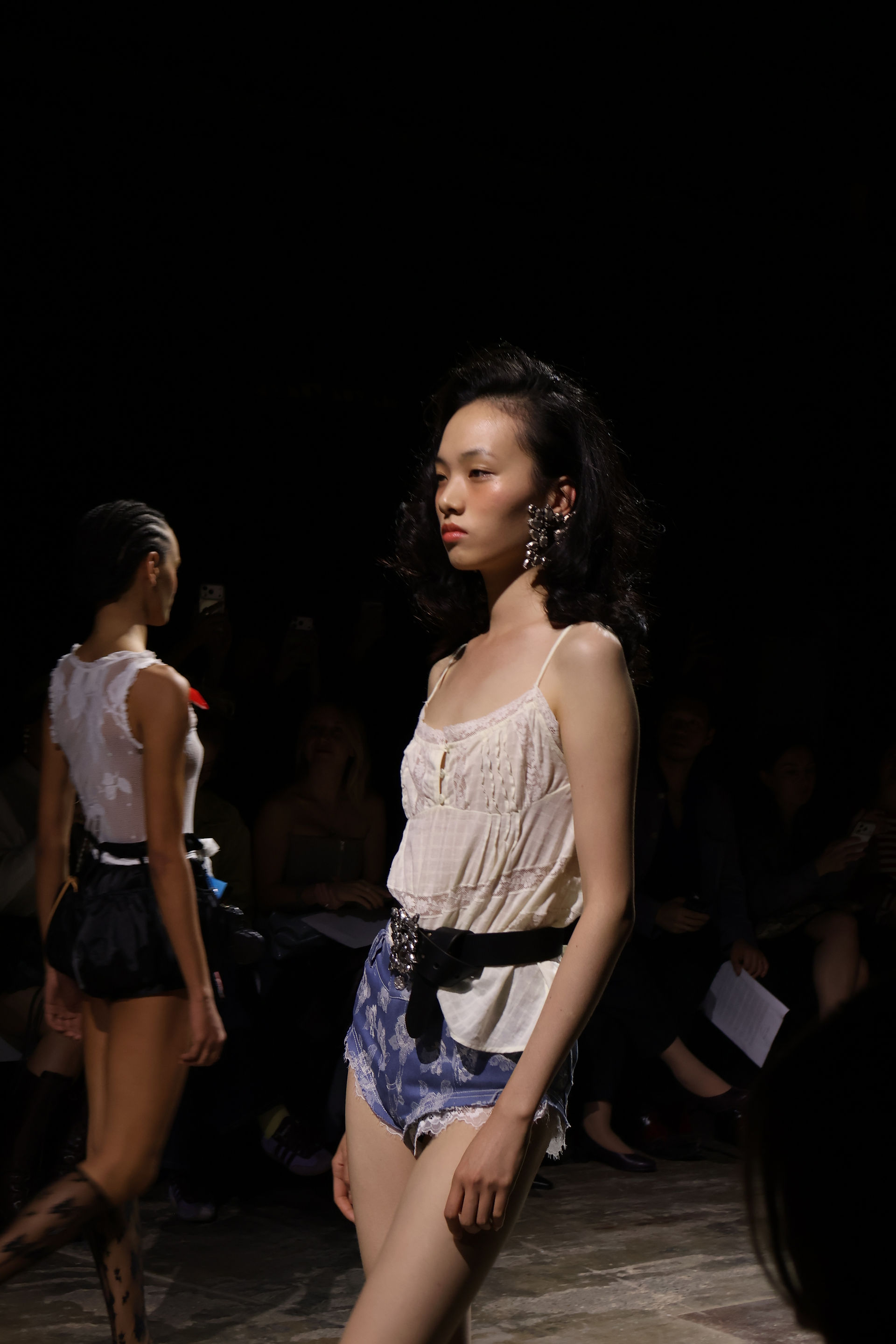


From familiar two-piece pajamas, Yuhan Wang expands her silhouette palette with hoop skirts to exaggerate the hips of the nightgowns, turning a certain innocence often associated with baby-doll-like garments into a sense of elegance. While some two-piece garments accentuate the legs and the waist, Wang reclaims the traditional baby-doll nightgown, transforming it into a haunting figure. Though normally associated with the infantilisation of women to a submissive role, Wang styles her garment alongside white lace gloves, placing the wearer outside of a slumbering state.
Though the colour palette remains muted around pastels, there are striking blues, reds, and leather browns combined with plaid, highlighting the collection’s rebellion against the conventional resemblance to sleep. Wang’s use of soft silks and yarns — which are often associated with comfort and warmth — is instead tightly woven against the model’s skin as thongs, shorts, and tights, subverting the expectations of female comfort and sexuality.
Most intriguing are the accessories carried — handheld mirrors and hairdryers that dangle from the shorts — which echo a familiar chaos of a bedtime routine while shifting the expected completion of a put-together figure. Instead, the collection embraces the messy and disoriented state the models seem to inhabit, translating this feeling into fashion. Objects act as a weight against the garment, pulling against the model’s pelvis, introducing a sense of discomfort in clothing meant to symbolise rest.
As the models walk down the runway one by one, the last model walks towards a theatrical bed. She hides behind the veil and falls back into a deep sleep from which she can no longer be awakened. The dreamy parade slowly enters upon the stairs, not quite completely concealed, bidding goodbye to the journey that Wang has taken us on.
Yuhan Wang not only subverts the idea of conventional sleepwear, but also revises the language used to describe innocence and femininity. Visual vocabularies of obedience give way to chaos and rebellion. Where sweetness exists, the nightmare may still hide within.
All images courtesy of Sabrina Hau
Edited by Simon Nora Dreyfus, Co-Fashion Editor


Comments