Hilary Woods on Night CRIÚ
Updated: Feb 15
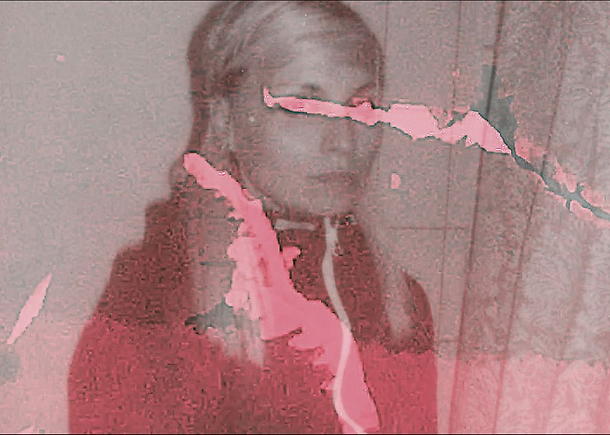
Irish musician, analogue filmmaker and writer Hilary Woods has always treated music as a lived, bodily practice rather than a fixed form. Born in Dublin, Woods first came to prominence as the bassist in JJ72, before carving out a solo path that blurs the lines between song, sound art, text and image. Across her work, music becomes a sensorial space where memory, feeling and physical presence collide.
Released on 31 October 2025 via Sacred Bones Records, her latest album Night CRIÚ marks a striking return to song form following the instrumental landscapes of Feral Hymns and Acts of Light. Written and produced entirely by Woods, Night CRIÚ is an intimate ecosystem of seven songs shaped by layered vocal harmonies and deeply reflective lyricism. The record uses voice as a way back into the body, gently confronting inherited narratives and bringing the unconscious into focus. As Woods has described it, each release acts as a marker in time: 'a life buoy, a raft, a snapshot… Making records is a way of being.'
Beyond the studio, Woods’ multidisciplinary practice extends into analogue filmmaking and live performance, often pairing her music with hand-processed 16mm film and archive footage. Her work has been presented at spaces and festivals including CTM Festival in Berlin, Café OTO in London and Roadburn, supported by Culture Ireland. With this new album, Woods offers one of her most direct and human records to date: quiet but powerful, rooted in presence, and unafraid to sit with what surfaces in the dark.
We spoke to Woods about returning to song form on Night CRIÚ, using voice as a way back into the body, and how music continues to function as a marker of time, memory and being.
Night CRIÚ marks a return to song form and to your voice after two largely instrumental records. What drew you back to singing at this point, and what did your voice unlock for you creatively?
I wanted to work with language again, and articulate things in a different form. I love song writing, the economy of it. I also wanted to return to the body on this record, and inhabit my music in a different way. Stepping into my own voice again to articulate my own lyrics felt important, in terms of evolving personally and artistically.
Your record label Sacred Bones have described the album as a way of “re-entering the body” and making the unconscious conscious. What kinds of inner or physical shifts were you aware of while writing and recording this record?
I loved writing this record. It was confronting but very rewarding and initially, I was simply writing songs before the record itself came into view. All writing in a way is making the unconscious conscious. The beauty about working with lyrics and sound together is that there are many tools to explore what you want to say within the framework of a song. Sometimes a song writes you and it just comes out, they tend for me, to be the best ones.
Having released Acts of Light in 2023, what was it like to finish Night CRIÚ two years later? Did it feel like a continuation, a rupture, or something entirely new?
It felt both entirely new and a continuation as I could not have made it I don’t think, without Acts of Light preceding it. In some ways each record is both a response and a rupture to the last one I’ve made.
The record feels intimate and self-contained, almost like its entirely own world. How did you approach layering vocals and lyrics to create that sense of closeness and immersion?
I think the immersive intimacy of the vocals and how they were recorded quietly and intimately, is key to the record and its atmosphere. The layering of vocals was very intentional and the close harmonies I wrote very early on. I think the vocals are very much the heartbeat of the record.

Do you have a song on Night CRIÚ that feels especially important to you, or one that taught you something unexpected during the process of making it?
I think all the songs have been teachers to me! Making a record is a very humbling process. The songs themselves make their presence felt and in many ways I just have to listen to what’s required. The process on Night CRIÚ felt wondrous and it flowed.
Your work often exists across sound, image, and texture. How do you come up with the visual world of your albums, both in live performance and in how they exist visually online?
Its trial and error. I usually have a singular feeling about a song I want to make a video for, and so that feeling is my compass! It’s a case of my using all tools at my disposal when it comes to creating the visuals. It’s a fun part of the process, and I enjoy using different formats, mixing analogue and digital imagery, editing and putting them altogether.
You’ve said that each record acts as a marker in time, a life buoy. Looking back now, what does Night CRIÚ mark for you personally or artistically?
I think it marks a period of lived time, and the things that I felt were necessary to hold up to the light and release, and dance with. Artistically, it was important for me to use my voice again, and to respond to Acts of Light with a record that had a very different energy and groove.
Having recently played festivals like CTM in Berlin, how has performing this new material live shaped your relationship to the songs, and are they continuing to change once they leave the studio?
They always change! That’s the thing, playing the songs live has meant a reconfiguring of instrumentation and expectation. I can’t bring 30 brass players on tour so I’ve had to improvise and think outside the box a bit in how to present these songs live which is a completely different art form in itself to the recording process. I try and be playful and light about it, I don’t think any live show is a representation of any record and I don’t try and make it be. I think if a song works, it should work singing it a cappella.
Listen to Night CRIÚ on Spotify, Apple Music, SoundCloud and follow her on Instagram.


Comments